
Do You Need an Expensive Camera for Landscape Photography?
When you first get into landscape photography, it can feel as if everyone else is using equipment that costs more than your car.
Full-frame mirrorless cameras. Expensive lenses. Carbon fibre tripods. Drones. Filter systems. Camera bags that appear to have their own mortgage agreement.
It is very easy to look at all of that and think, “Well, I can’t start properly unless I spend thousands.”
But honestly, I don’t think that’s true.
My first proper digital camera was a Nikon D3200. An entry-level DSLR. Crop sensor. 24 megapixels. No fancy mirrorless wizardry. No huge price tag. And definitely no YouTube photographer ego attached to it.
Looking back now, I can say this with a fair bit of confidence:
The camera was not the problem. I was.
Well… mostly me.
Because yes, the Nikon D3200 had limitations. But it also taught me an enormous amount about landscape photography.
My First Proper Camera: The Nikon D3200
The Nikon D3200 was not a professional camera. It was not designed to compete with modern full-frame mirrorless systems, and I’m not going to pretend otherwise.
But as a beginner landscape photography camera, it gave me a lot of what I needed.
It allowed me to shoot in manual mode. It captured RAW files. It had interchangeable lenses. It had enough resolution for printing, editing, social media and website use. Most importantly, it was a camera I could actually afford and get outside with.
That matters more than beginners sometimes realise.
The best camera for landscape photography is not always the newest or most expensive one. Sometimes, the best camera is the one that gets you out the door and teaches you how to think.
An Entry-Level DSLR Can Still Produce Strong Images
One of the images I often come back to was taken at Gwithian Beach on the 24th of June 2019.
It was shot with the Nikon D3200, an 18–70mm lens, a tripod, a polariser, a graduated ND filter and a solid ND filter. It was a long exposure seascape at sunset, and when I recently re-edited the original RAW file, I realised something important.
The file had more in it than I understood at the time.
The camera had captured the scene well enough. The detail was there. The colour was there. The exposure was usable. What had changed was not the camera.
I had changed.
I had become better at understanding light, editing, colour, contrast, composition and how far I could push a RAW file without making a mess of it.
That is one of the biggest lessons I think beginners need to hear.
Your camera may be more capable than you think. But you still need to learn how to get the best from it.
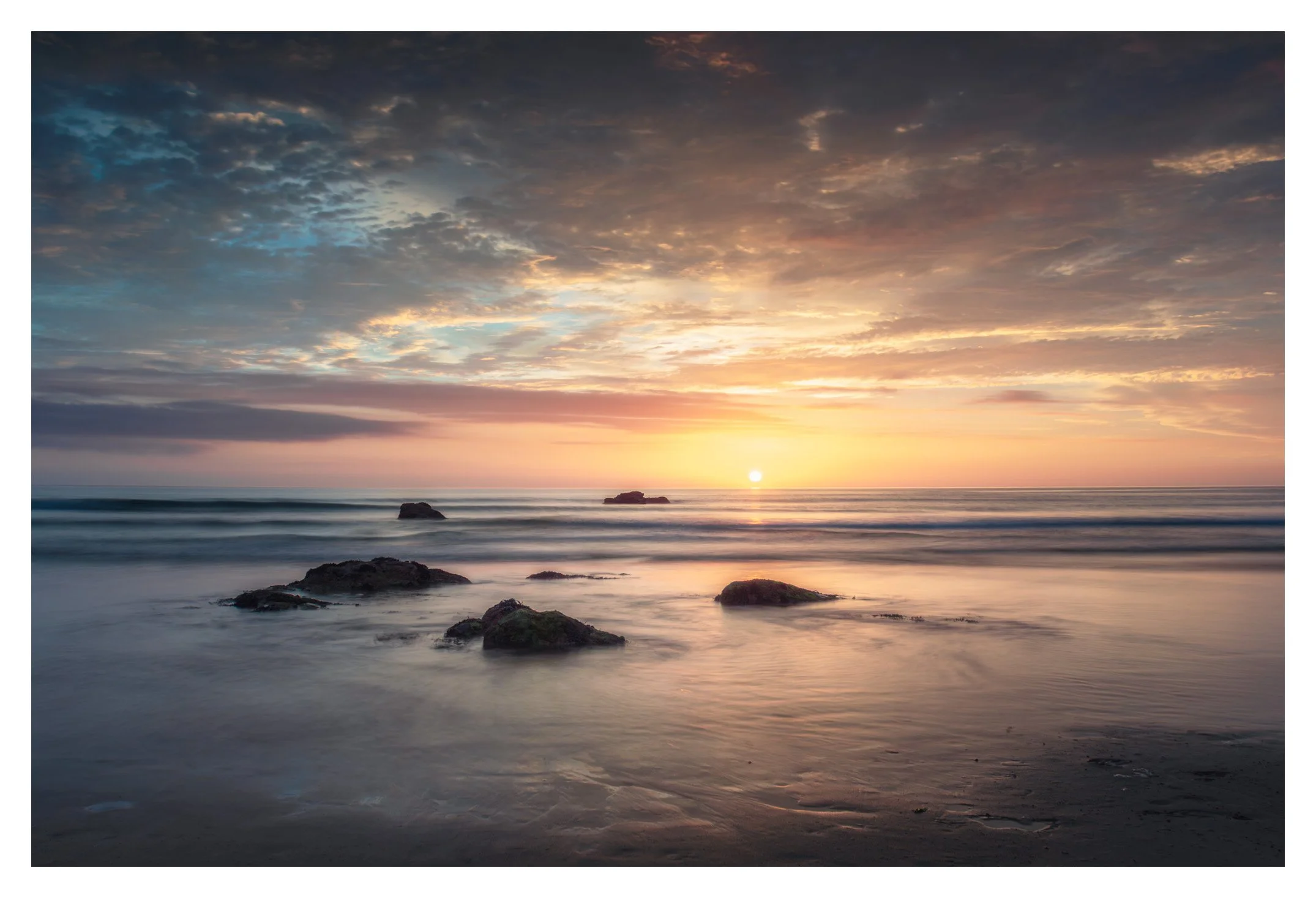
Gwithian Beach, June 24th 2019, Nikon D3200.
Better Gear Will Not Fix Bad Decisions
Camera gear matters, of course it does. But it probably matters less than beginners think.
If the composition is weak, a better camera will not fix it.
If the light is boring, more megapixels will not magically make it interesting.
If the exposure is wrong, especially in a high-contrast landscape, there is only so much you can recover later.
If the editing is heavy-handed, even a good file can fall apart pretty quickly.
The things that improved my photography were not just better cameras. They were learning how to see. Learning how to be patient. Learning when to include the sky and when to leave it alone. Learning how to use filters properly. Learning how to expose carefully. Learning how to edit RAW files without bullying them into submission.
A better camera can make life easier.
But it cannot do the seeing for you.
Where Older Entry-Level Cameras Struggle
Now, let’s be honest. Older entry-level DSLRs do have limitations.
The Nikon D3200 could absolutely handle landscape photography, but there were times when it needed to be treated with a bit of respect.
Dynamic Range
High-contrast scenes were where the camera started to struggle.
A bright sunset sky with a dark foreground can be difficult for an older crop sensor camera. Expose for the foreground and the sky may blow out. Expose for the sky and the foreground can become very dark.
That does not mean the camera is useless. It means you need to make careful decisions.
Sometimes you need a graduated ND filter. Sometimes you need to bracket exposures. Sometimes you need to accept that the foreground will become a silhouette.
And sometimes, the silhouette is the photograph.
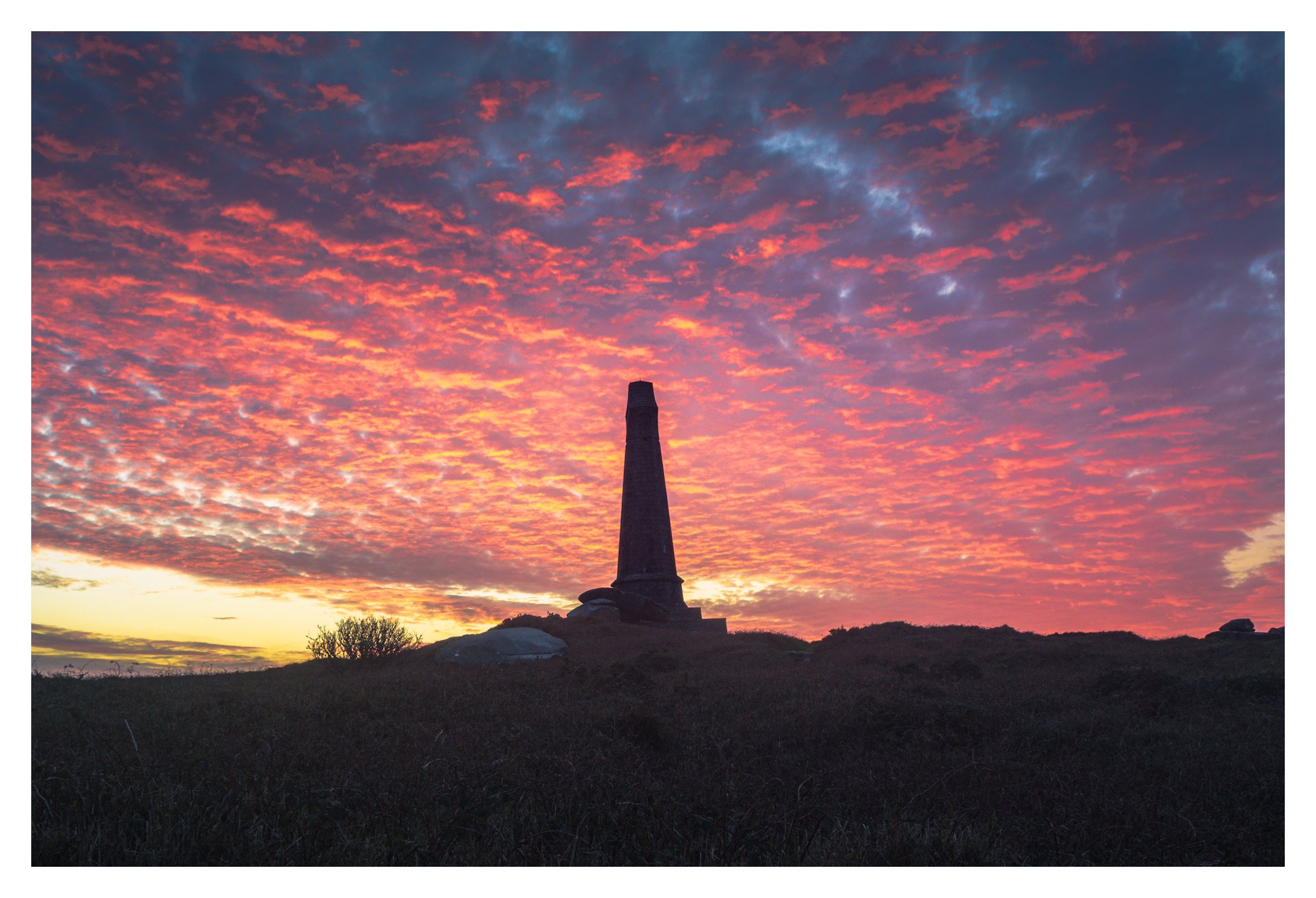
Carn Brea shot with the Nikon D3200.
Shadow Recovery
If you underexpose too much and try to recover all the shadows later, older files can quickly become noisy and muddy.
This is where modern cameras really do help. Better sensors give you cleaner shadows and more flexibility when editing.
But again, this is also a learning opportunity.
Older cameras teach you not to be lazy with exposure. They teach you to protect the highlights. They teach you to think before pressing the shutter.
That is not a bad thing.
Screens, Live View and Handling
Compared with modern cameras, older entry-level DSLRs can feel basic.
The rear screens are not as good. Live view is clunkier. Autofocus is not as advanced. Video features are usually not worth getting excited about.
For landscape photography, though, that is not always a deal breaker.
Most landscapes are not running away. You have time. You can use a tripod. You can slow down. You can check your settings. You can think.
And honestly, slowing down is one of the best habits a landscape photographer can develop.
What Actually Makes a Strong Landscape Photograph?
A strong landscape photograph is rarely about camera price alone.
It is about light, subject, timing, composition and patience.
A clear subject helps enormously. A lighthouse. An engine house. A tree. A rock formation. A wave. A path through the frame. Something the viewer can understand.
Good light helps too, but that does not always mean dramatic sunset colour. It might be soft woodland light, stormy skies, side light across a cliff, or the quiet tones of blue hour.
Then there is field craft.
Walking around. Looking for lines. Checking where the water is moving. Waiting for the light. Moving the tripod a few feet because the first composition was almost right, but not quite.
An entry-level camera can record the photograph.
It cannot find the photograph for you.
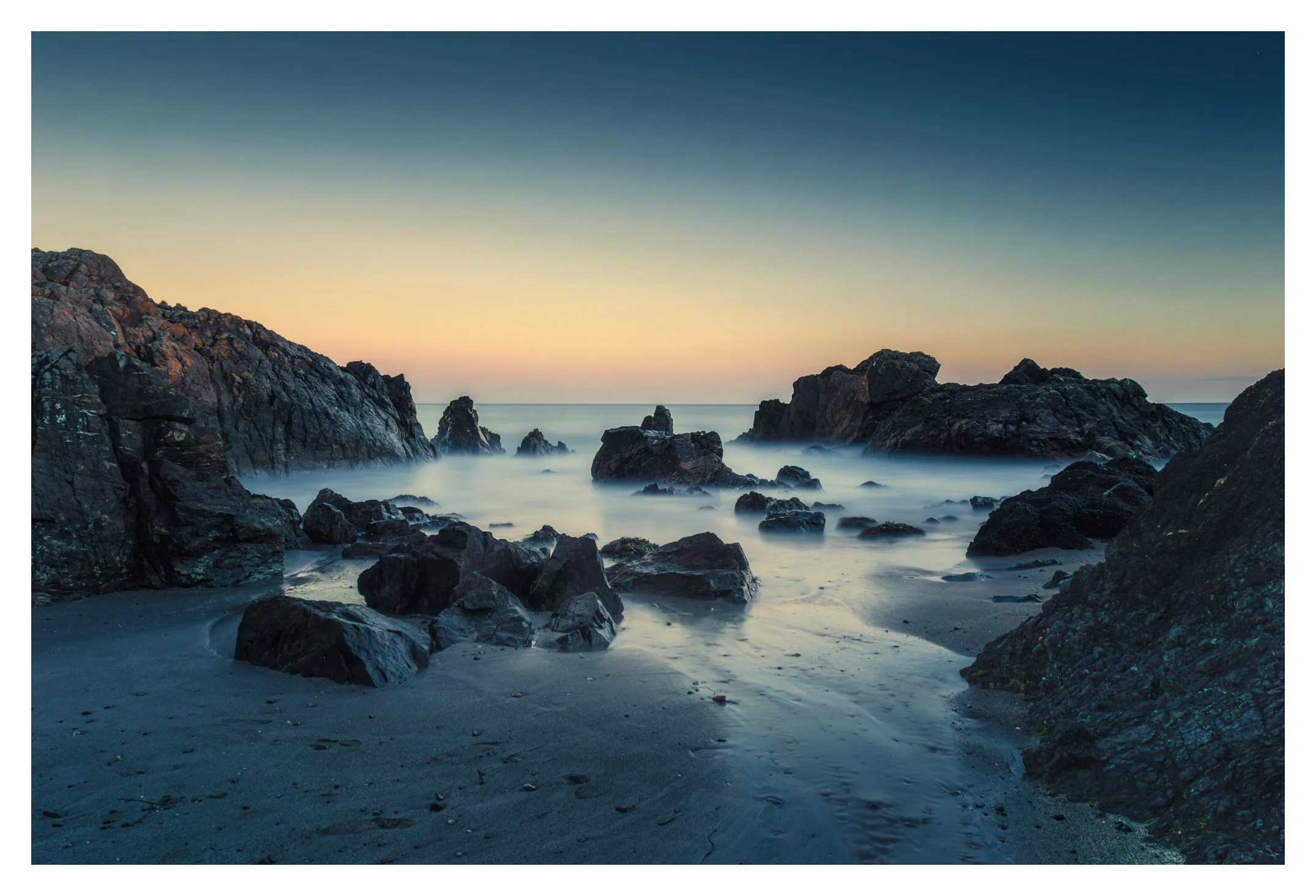
Kennack Sands, Nikon D3200, NiSi Landscape CPL, 4 Stop Soft GND, 10 Stop ND.
What Should Beginners Spend Money On?
If someone asked me what to buy for beginner landscape photography, I would not tell them to spend all their money on the camera body.
I would start with a sensible used camera.
Then I would think carefully about the rest of the kit.
A decent lens matters. It does not have to be expensive, but it does need to suit what you want to photograph.
A tripod matters, especially if you want to shoot seascapes, woodland, blue hour, low light or long exposures.
Spare batteries and memory cards matter, because running out of power or storage just as the light is kicking off is the kind of thing that makes you question your entire existence.
Editing software matters too. Not because you need to fake everything, but because RAW files need processing. Learning how to edit is part of learning photography.
Eventually, filters can matter. A polariser. A graduated ND. A solid ND filter. For landscape and seascape photography, they can be incredibly useful.
But none of it replaces time outside with the camera.
Good light. Bad light. Mistakes. Disappointment. Trying again.
That is where the improvement happens.
Other Affordable Beginner Camera Options
I have used the Nikon D3200 as my example because that is where I started, but I am not saying everyone should rush out and buy the exact same camera.
There are lots of affordable used cameras that can help you learn landscape photography.
Older Nikon DSLRs like the D3200, D3300, D5300 and D5600 can still be very capable.
Canon bodies like the 600D, 650D, 700D, 750D and 760D are also worth looking at, especially because Canon’s used lens ecosystem is huge.
If you want to go mirrorless, something like the Sony A6000 is still a popular budget option.
Some older Pentax bodies can also be interesting for landscape photography, especially where weather sealing and in-body stabilisation are part of the package.
The brand is not the most important thing.
The important questions are:
Can you shoot RAW?
Can you control aperture, shutter speed and ISO?
Can you change lenses?
Can you put it on a tripod?
Can you afford it without having to sell a kidney?
If the answer is yes, brilliant. Start there.
Do You Need an Expensive Camera?
No.
You do not need an expensive camera to start landscape photography.
Would a better camera make some things easier? Yes, absolutely.
Modern cameras offer better dynamic range, cleaner files, improved autofocus, better screens, nicer handling, stronger video features and more flexibility.
All of that is real.
But do not let the price of modern camera gear convince you that landscape photography is out of reach.
An older entry-level DSLR or affordable mirrorless camera can still teach you an enormous amount. It can teach you exposure, composition, patience, editing, timing and how to work within limitations.
And those lessons are worth far more than beginners sometimes realise.
The Nikon D3200 was not perfect.
But it was my starting point.
Looking back, I am glad I had it, because it did not just help me take photographs.
It helped me become a photographer.
Watch the Video
I’ve made a full video on this topic, where I show real images taken with my old Nikon D3200 and talk through where it worked, where it struggled, and what I learned from using it.
Watch it here: